Life is good. Making money and lookin up.
Im drunk right now and about to eat my favorite food group a pizza then netflix and chill. I couldn't imagine life would be this good. Im so determined to reach my goals. I wanna cut everyone out who isnt serving them. Bye bye.
Sunday, January 22, 2017

Saturday, January 14, 2017
We dem boyz
New job, happier, a bit more optimistic.
I know its been awhile since i posted on my blog, i would like to use it as a general of sorts to record my inner thoughts. It seems like life is getting better. I would say im alot more optimistic lately, although a car cannot come soon enough. I want to explore the world. This town is too small and familiar to me. I want to leave it behind forever.
Its almost as if fate keeps sending me back here. I see a question. Im not absolutely certain what it is, although i sense the presence. I believe life is a question. And its up to the person to answer it.
I know its been awhile since i posted on my blog, i would like to use it as a general of sorts to record my inner thoughts. It seems like life is getting better. I would say im alot more optimistic lately, although a car cannot come soon enough. I want to explore the world. This town is too small and familiar to me. I want to leave it behind forever.
Its almost as if fate keeps sending me back here. I see a question. Im not absolutely certain what it is, although i sense the presence. I believe life is a question. And its up to the person to answer it.
Monday, February 3, 2014
The Hobbit

So the other day i finished The Hobbit. Suffice to say i thoroughly enjoyed the movie. The plot revolves around Thorin Oakenshield and his band of dwarves seeking to reclaim their homeland/kingdom that was destroyed/taken over by the evil dragon Smaug. Along to help them is the hobbit Bilbo Baggins, uncle of the LOTR trilogy Frodo Baggins, and Gandalf the Grey. The movie is one part of a three part trilogy and begins like the Fellowship of the Ring on a rather light note combined with a slower pace. Although the scene in Bag End with the dwarves is pretty entertaining.
 Peter Jackson's trademark touches are in full swing here. The landscapes are breath taking and the sets are trully a step back into another time. All of the monsters look incredible and i noticed even the goblins and orcs look more realistic than their LOTR trilogy counterparts. I was particularly impressed with Thorin Oakenshield and Bilbo Baggins. Both have well developed characters and its easy to see how each ended up with their particular world views. What i really enjoyed was the courage of Bilbo Baggins and relatively simple minded yet crafty way they portrayed him. It was a breath of fresh air after the overly emotional performances of Frodo and Sam in the trilogy. We have a simple homebody hobbit whos clever, crafty and enjoys the finer things in life, but when push comes to shove dedicates himself to a worthy cause. Oakenshield plays the warrior king struggling to find his way home.
Gandalf the Grey is his usual smart and elderly self. For some reason this film worked better with relatively no
name actors instead of a bunch of over acting "stars".
 One of the bigger criticisms i heard about this film was in the form of a question. Is this movie really needed? To the minimalist possibly no, but give Peter Jackson credit for continually doing the books justice and bringing them to life. I actually enjoyed this movie better than most of the trilogy ones, not because of the fight scenes, or special effects, because the characters are more likeable and seem more fleshed out to me. One of my biggest criticisms of the trilogy was the overly emotional interplay between Sam and Frodo. And also Orlando Bloom as Legolas. I also didn't particularly like Viggo Mortensen as Aragorn, but thats another thing entirely. Yes the movie is basically one long walk from point A to point B buts its entertaining because of the interplay between the characters. If its not Oakenshield doubting Bilbo Baggins intentions and being consistently proven wrong, its the way the dwarves turn seemingly normal activities into song and dance numbers.
All in all i would highly recommend the movie and its sequel. It's slightly less nauseating in the melodrama and more meat and potatoes tolkien universe. It's not the most action packed movie around but for those looking to transport themselves to a place where hobbits and dwarves and wizards eat at the same table, and sing song and dance while puting away dishes. Look no further.
Saturday, February 1, 2014
Update January 31, 2014: News reports indicate that legislation to renew expired Emergency Unemployment Compensation
(EUC) will be back on the Senate agenda next week, with Senate Majority
Leader Harry Reid is hoping for a vote next week on a 3 month
extension. Senator Cory Booker (D-NJ) said yesterday that, if this
legislation is passed it would be retroactive, "The proposal that is
being pushed now involves making the payments retroactive. So if we pass
it that will be the case."
In addition, President Obama has announced an initiative to encourage hiring of the long term jobless. Here's a list of companies that have pledged to encourage the hiring of unemployed workers.
This is good news, retroactive, i like the sound of that
Contact Congress: Here's how to contact Congress to urge them to renew federal unemployment benefits.
In addition, President Obama has announced an initiative to encourage hiring of the long term jobless. Here's a list of companies that have pledged to encourage the hiring of unemployed workers.
This is good news, retroactive, i like the sound of that
Contact Congress: Here's how to contact Congress to urge them to renew federal unemployment benefits.
Wednesday, January 22, 2014
Bitcoins are the new revolution
Welcome To The Colorado Gas Station Where You Can Fill Your Tank On Bitcoins

The Bitcoin revolution is steadily marching toward a merchant near you. At the first gas station in the U.S. to accept Bitcoins, Funyuns, energy drinks and a full tank of gas are a brief digital money exchange away.
Once reserved for hackers, gamers and online activists, the peer-to-peer digital currency is quickly gaining legitimacy. In Colorado, you can buy a scuba trip for your family, a checkup for your dog, an acupuncture treatment for your mom, a bottle of wine for dinner, or even the mundane: gas for your car.
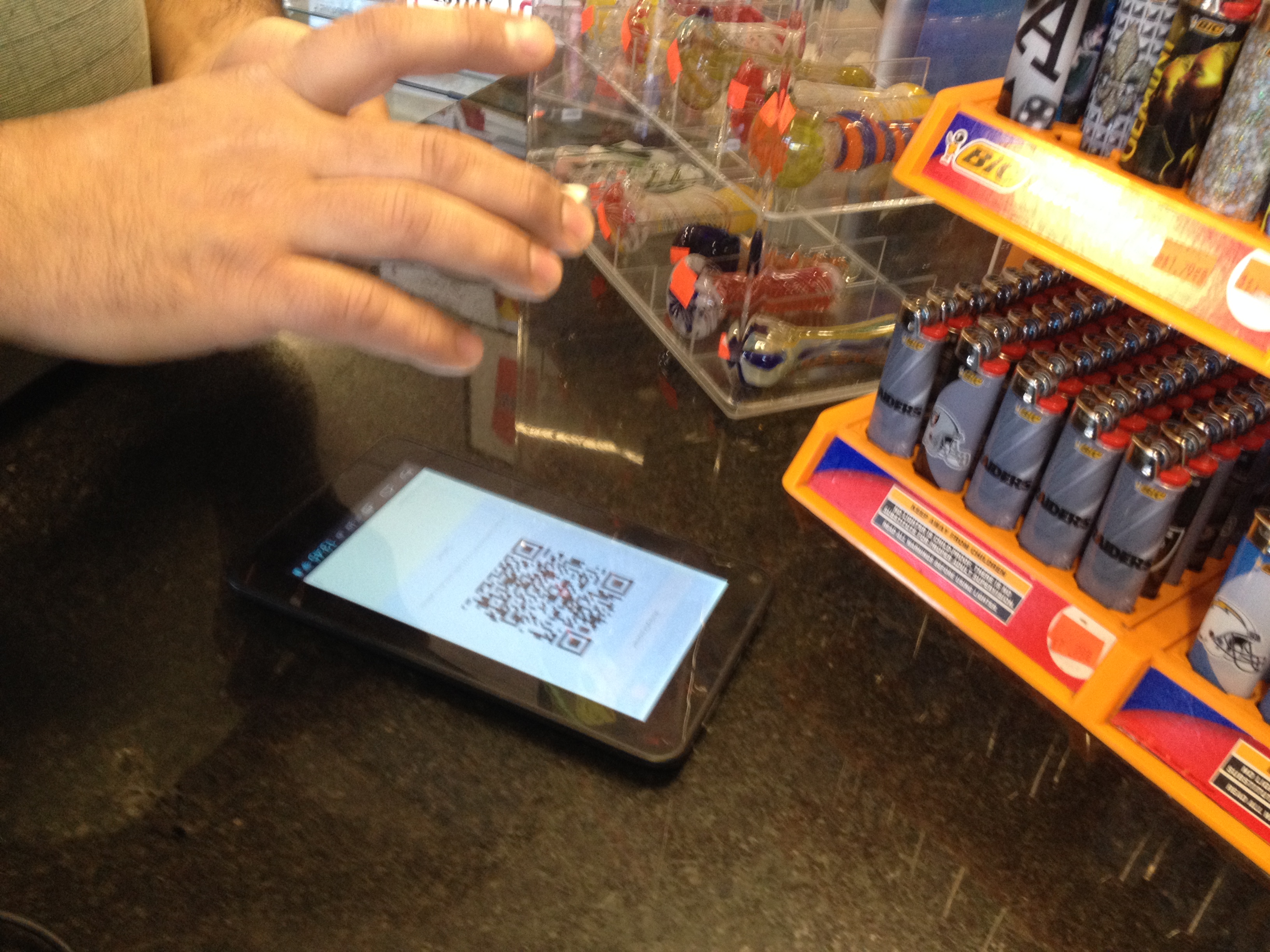
At Greeley’s Cosmic Market, a large Bitcoin poster hangs in a shop window proudly proclaiming: “Take The Power Back! Let The Banks Eat Cake!” A large yellow sticker near the credit card machine says “Bitcoin” in black letters.
On a recent Saturday most customers didn’t even know what Bitcoin was.
In a nutshell, Bitcoins are a decentralized digital currency that uses cryptography to control transactions rather than a central authority. There’s no government agency or central bank, like the United States’ Federal Reserve, keeping tabs on the millions of Bitcoins exchanged daily.
At first i was sceptical as most probably were. This seems like a pretty cool idea as long as nothing super illegal is done with it.
But that doesn’t bother owner Shahzad Sarwar, who works by day as a computer programmer. For him, offering payment via Bitcoin comes from a deeply held philosophical belief.
“I don’t believe in making money from money,” he said. “So this really gets the banks out of the system, and governments out of the system.”
There’s also an economic incentive. The peer-to-peer system has no transaction fee, standing in sharp contrast to credit cards.
“The amount I spend in credit card processing is close to $35,000 every year,” he said. “That’s a shocker when people first hear that.”
A growing number of businesses are now accepting Bitcoin. Two recent announcements from theSacramento Kings and Overstock.com give enthusiasts hope. The currency is also being touted as a possible banking solution for Colorado’s marijuana dispensaries that work largely in cash because banks are reluctant to offer accounts to the businesses.
Sarwar won’t be throwing out his credit card terminal anytime soon. So far only about one dozen customers have made purchases in Bitcoin since he started offering it. Many of those customers were enthusiasts who sought out Sarwar’s gas station to support the currency.
As i read more about it, starting to form a picture. It's a pretty cool idea, but they need to put a stop to people using it to buy illegal drugs.
As for the majority of customers clueless about Bitcoin?
The way Sarwar sees it, his gas station is just part of an educational campaign. Call it bringing Bitcoin to the masses.
“They go home, and they Google it. Slowly it’s an awareness campaign in itself,” he said. “Just putting the posters up and just saying ‘Bitcoin accepted here,’ it’s getting people to go out and learn about it.”
Saturday, January 11, 2014
Bitcoins?!?
Article is from Should you invest in Bitcoins? @ Askmen.com
Should You Invest In Bitcoins?

Over the holidays, the digital currency Bitcoin attracted attention by fluctuating dramatically in value, increasing from $110 US in September to $1,100 in early December, then back down to $550 in mid-December. The currency, formerly best-known for being the trading chips in online black market the Silk Road, is making its foray into the mainstream, and has many wondering whether or not to invest.
The silk road? This is interesting, I'm wondering the types of things that can be bought at this "online black market".
Some have already taken the leap of faith: The Peter Thiel Foundation has invested $3 million and the Winklevoss twins, of The Social Network fame, made a personal investment of $1.5 million. The IRS is already studying how bitcoins may be taxed.
However, many economists have decried the currency due to its volatility. The roller coaster of activity over the past few months is a prime example. The value shot up dramatically after it was declared in a United States Senate committee hearing in November that "virtual currencies were considered a legitimate financial service." However, in early December, China prohibited Chinese financial institutions from using bitcoins, and the value of the currency quickly dropped by 40%.
Definatley doesn't seem to be a very dependable form of currency. I wouldn't hedge my bets on it in the long-term.
Regardless of whether or not the currency will be recognized as legitimate by major national financial institutions, it is still recognized, even by China, as a "commodity" — and this means merchants can choose whether or not to accept it in exchange for goods and services. According to Wikipedia, there are currently 1,000 physical merchants and 20,000 online merchants that accept bitcoin as payment — some of which include OkCupid, WordPress and Virgin Galactic.
There are already several Bitcoin ATMS at which you can exchange cash for bitcoins across the world. The first opened in Vancouver in late October and was followed by others in Hong Kong, Slovakia, San Diego, Helsinki, and most recently Toronto.
Bitcoins prove particularly useful in transferring money across nations, as there is no exchange rate and there are no transaction fees. The bitcoin ATMs do no even require you to have a bank account or verify your identity. However, these are the types of details that have some governments concerned about bitcoins aiding illicit activities.
I'm wondering where the value is comming from? Doesn't make sense if there not backed by gold.
So how are bitcoins produced? The process is called "mining," and it involves a network of "miners" maintaining large CPUs that solve irreversible cryptographic puzzles which unlock "blocks" of bitcoins. A recent Wired article explained that the difficulty of the puzzles increases as the number of miners increases, which slows production to roughly one new block every 10 minutes. Every 210,000 blocks, the size of each block is cut in half. Back in 2009, when bitcoins were first being mined, a block consisted of 50 bitcoins and has since decreased to 25, then 12.5, and so on since. There is a finite number of bitcoins — 21 million — and no more will be created after the mining of all units is complete. The creator of bitcoin, a mysterious figure known as Satoshi Nakamoto whose virtual presence disappeared in December of 2010, designed the process to avoid inflation of the currency. The process of mining is the rebuttal to those who criticize the ambiguity of bitcoin use value, as the labor value is clearly established.
Completely unestablished currency created by shady character. Sign me up! Labor value but not backed by anything?
A New York Times article published over the holidays touched on the some of the environmental concerns over regarding CPUs that mine bitcoins. The CPUs used in Iceland that do the bulk of bitcoin mining are worth $20,000 each and use large amounts of energy that cause them to overheat, requiring a cooling mechanism. Not only has this led some to believe bitcoin mining to be wasteful, but money spent on energy costs and machine depreciation affects the profitability of the mining as well.
In 5 years come to find out it was a complete waste of resources. Big surprise
At this point, the methods of obtaining bitcoins are: exchanging cash; mining; and selling products and services for bitcoins. An article published on TechCrunch last April briefly describes how to get into "pooled mining" of bitcoins, meaning you hook up with a group of people to split the work. It sounds intriguing for the technically inclined, but for the average Joe, you may be biting off more than you can chew.
We have yet to see how the legacy of bitcoins will unfold. Some have compared the phenomenon to the "Tulip Mania" of the early 1600s. If you invested back in the early days, it should be a wild ride, but for the rest of us, it may be best to just sit back and watch.
Almost as good as Beanie babies........
Commentary on Who Gets To Be A Superhero
I'm commenting on this article, in no way am i taking credit for writing this article. When i comment something it will be written in blue.
This is from Who Gets To Be A Superhero?
Who Gets To Be A Superhero? Race And Identity In Comics

The X-Men comic franchise has proven remarkably sturdy in the half-century since its launch. They've spawned dozens of animated series and four major Hollywood films with a fifth due out this summer. A big part of that is due to its central premise — a minority of superpowered humans called mutants are discriminated against by their government and fellow citizens — which has functioned as a sci-fi allegory for everything from the civil rights movement to the AIDS crisis.
"The X-Men are hated, feared and despised collectively by humanity for no other reason than that they are mutants," Chris Claremont, a longtime X-Men writer once said. "So what we have here, intended or not, is a book that is about racism, bigotry and prejudice."
In many stories, those themes are underlined and circled using language in the real world. The X-Men's leader, Charles Xavier, and Magneto, his nemesis, are on opposite sides of an ideological debate over whether they should try to integrate with humans or not; they're referred to by writers and fans explicitly as analogs to Martin Luther King and Malcolm X. In the first X-Menmovie, a teenager revealed that he was a mutant to his parents in a scene that was framed as a kind of coming out. ("Have you ever tried...not being a mutant?" his mother asks.)
But an artist named Orion Martin noted that the X-Men comics have skirted around the depiction of the people on the receiving end of much real-life discrimination: the main lineup in the X-Menteam has been mostly straight, white dudes. Martin nodded to the work of Neil Shyminsky, an academic who's written about the X-Men's complicated relationship with real-life racism:
20 bucks for completely missing the point. With all due respect you cannot throw racism on everything. Its almost as if people look for signs of racism and project it all over. Its X-Men lets enjoy it for what it is.
Rumor that Fruitvale Station's Michael B. Jordan might be cast as the Human Torch set many fans' teeth on edge. ("Now is not the time," a writer at the site Comic Book Movie said, arguing that a black Human Torch would "confuse a lot of people.")
"It's the natural result when the industry spends decades prioritizing white male characters — you have white male fans getting twitchy over this sort of casting while accepting white-washing or all-white stories," said Arturo Garcia, the managing editor of Racialicious. (He referenced the novelist Junot Diaz's famous quip that many geeks "will read a book that's one third Elvish, but put two sentences in Spanish and [white people] think we're taking over.")
Am i the only one who finds the term white-washing racist? Stan Lee was a white guywho wrote comics with white characters. Makes sense?
The result is a sense that some demographics in fandom are seen as less authentic and less valuable consumers of geek culture. Paul Dini, one of the architects of DC Comics' wildly successful animated superhero franchises of the last two decades, told Kevin Smith that their recent series, Young Justice, was cancelled not because it didn't have enough viewers, butbecause too many of those viewers were girls.
There was a belief among network executives that girls didn't buy as many toys as boys, Dini said. "It's like, 'We don't want the girls because the girls won't buy toys.' ... Boys buy the little spinny tops, they buy the action figures, girls buy princesses, we're not selling princesses.'"
Those calculations about what the audience looks like and should look like almost certainly influence the kind of stories that get told in comics, and which characters get to star in those stories.
"A lot of this has to do with the category of person publishers and filmmakers think of as being familiar [with and] identifying with the characters," Pettis said. "What's the nerd stereotype? The guy who looks like Kevin Smith, or the [brown] girl who's been loyal to the same comic shop for years? There's a worry, subconscious or not, that if white males have no one to identify with that the readership vanishes. No amount of trend-bucking — take Miles Morales, for example — is going to change that."
Man if that don't take the creativity and essence of the whole deal right out of the game.The over marketing and commercializing is whats killing pretty much every creative thingIts a lot like video games now adays, or tv, its so dumbed down and tries to be everythingto all people at the same time. Mass appeal has ruined alot of things that were once rich and spontaneously great.
Minority Themes Can Make Characters Richer
While there are lots of brown superpeople in the fictional universes that these heroes inhabit, they're usually tertiary characters. But their identies open a range of thematic possibilities.
"In the comics, Ra's al Ghul certainly seems shaped by his cultural and ethnic background, but the multifaceted nature of his personality prevents him from being reduced to an easy stereotype," Kanayama said, referring to the Middle Eastern supervillain who has been one of Batman's oldest foes. "He's a father, a leader, a conflicted nemesis/mentor figure, a man who's lived through centuries and seen empires rise and fall."
But Liam Neeson was cast to play him in the blockbuster Batman Begins movie. "All of that could theoretically have been brought out in the movies, and if it had, the studio could have cast a Middle Eastern actor in a role with nuanced, intricate characterization," Kanayama said.
As my Code Switch colleague Matt Thompson noted not long ago, characters of color often bring unintended but fascinating resonances to their stories. He cited George Romero's Night of the Living Dead, which came to be seen as subversive critique of 1960s-style American racism:
There are ways in which mutants of color complicate the mutant-as-minority metaphor, too. Charles Xavier, the X-Men's leader, believes that humans and mutants can peacefully coexist. Magneto, their most persistent foe, believes that the survival of mutantkind rests in their separation from humans. In the popular fan construction, Xavier is Martin Luther King while Magneto is Malcolm X.
There's a moment in the most recent X-Men movie in which Magneto, played by Michael Fassbender, is making his pitch to a group of young mutants, and he makes a fairly on-the-nose allusion to real-life racial discrimination. Almost all the mutants of color and the mutants who are not otherwise obviously human decide to roll with him. The white kids who looked "normal" teamed with Xavier. It was hard to miss the subtext: the people who can't simply "pass" were going to find it harder to be accepted, and so assimilation was going to be the most difficult for them. That's a lot of heavy stuff to cram into a scene featuring people in ridiculous leather outfits who can move things with their minds.
I guess i would say that theres no reason to not have characters of color. But its a nonissue when you don't look for it. If you stop thinking about it and seeing it as a racial thingthen it becomes less of an issue. Whether or not there are characters of color should be anon issue. They forget about Bishop in X-Men who was portrayed as a badass.
Not All Marginalization Is The Same
Some high-profile storylines in the X-Men universe have underlined just how strained the mutant-as-minority metaphor can be. One recurring theme is the requirement that mutants register with the government. But many fans point out that the government does have a security interest in monitoring citizens who can level city blocks by accident. People of color or LGBTQ folks — whose identities are mined for narrative effect in these stories — hardly pose the same societal threat.
In another storyline, a high-profile mutant named Havok — a white guy with blond hair and blue eyes — gives a speech in which he tells the assembled that he doesn't want to be labeled a "mutant." (He refers to it in the comics as the "M word.") He wants to be seen simply as a person. For many readers, it was an assertion that seemed frustratingly tone-deaf:
The comic-hero-as-social-outcast is a cliché at this point. But it allows readers to feel empathy for the main characters. (Because really: who hasn't felt like an outcast at some point?) After Orion Martin explained his artwork, a commenter named Cole Dawson highlighted the ways the mutant metaphor leaves a lot of be desired.
This is why those explicit Martin Luther King allusions from X-Men writers come with so much baggage. The experiences of different minority or oppressed groups are not neat metaphors for each other. They may resonate with each other but they can't substitute for each other.
The same phenomenon plays out in real-life. People often compare today's civil rights movements with the black civil rights movement, and while there may be similarities and echoes, there are just as many substantial differences. We can look for patterns without drawing equivalences.
It seems they missed the point. Havok is wanting to be known for who he is personallyNot for what his racial, or mutant affiliation. He's saying I don't want to be called mutant,I want you to see me as a person. We have to label and catagorize everything to try to figure out everything in life. It makes sense why someone would say, I'm Guy Groomes, not caucasian brown hair blue eyes.
Subscribe to:
Posts (Atom)